

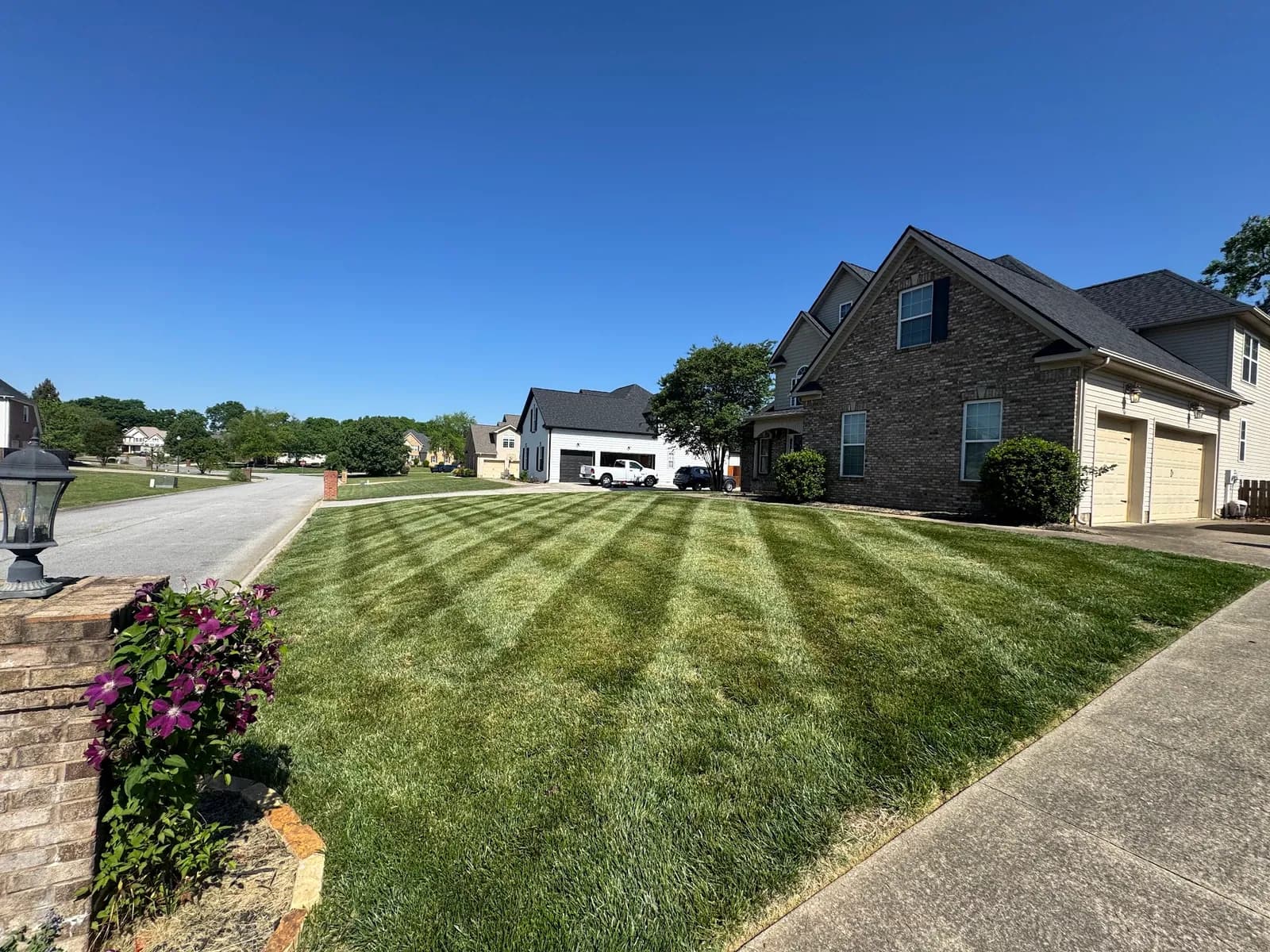
A lawn can receive regular mowing, sunlight, and water and still struggle to grow thick and healthy. Sometimes, the issue is happening below the surface.
Soil compaction can make it harder for air, water, and nutrients to move through the ground. When soil becomes tightly packed, grass roots may have difficulty growing into the spaces they need. The lawn can begin to look thin, uneven, or stressed, even when you are keeping up with routine maintenance.
This is where lawn aeration can help.
For homeowners in Chattanooga, Tennessee, knowing when to aerate is just as important as understanding why aeration is useful. The right timing depends on the type of grass growing in your yard, its current condition, and the season.
In this guide, we explain how lawn aeration works, the signs that your property may benefit from it, how timing differs between common Tennessee grass types, and what homeowners should consider before scheduling the service.
What Is Lawn Aeration?
Lawn aeration is a process that creates openings in the soil to help relieve compaction and improve the movement of air, water, and nutrients through the root zone.
One of the most common methods is core aeration. A machine removes small plugs of soil and deposits them across the lawn. These openings create additional space within compacted soil and give roots more room to develop.
Aeration is not the same as mowing, dethatching, or fertilizing. Each practice serves a different purpose:
- Mowing keeps grass at a manageable height and encourages a more uniform appearance.
- Dethatching removes an excessive layer of dead grass stems, roots, and other organic material that can accumulate between the soil and growing grass.
- Fertilizing supplies nutrients that support grass growth.
- Aeration helps address soil compaction by creating openings in the ground.
These practices may work together as part of a broader lawn maintenance plan, but they should not automatically be performed at the same time. The condition of the lawn and the type of grass should guide the decision.
Why Does Soil Compaction Matter?
Healthy grass depends on more than what you can see above the ground. The root zone plays a major role in how well a lawn handles everyday conditions.
Soil naturally contains a combination of mineral particles, organic matter, water, and air. When the soil becomes compacted, the spaces between particles become smaller.
This can affect several parts of lawn growth.
1. Restricted root development
Roots need room to spread through the soil. Compaction can make it more difficult for roots to grow downward and outward, limiting the area from which grass can access water and nutrients.
2. Slower water movement
Water may have difficulty entering compacted soil. Instead of soaking into the ground, it may collect on the surface or run toward lower areas of the property.
3. Reduced air movement
Roots need oxygen to function. When soil pores become compressed, the movement of air through the root zone can be restricted.
4. Greater stress during challenging weather
A lawn with a limited root system may have a harder time coping with periods of heat or reduced rainfall. Addressing compaction can be one part of improving the growing conditions around the roots.
Aeration can help create better conditions, but it is not a cure for every lawn problem. Poor drainage, unsuitable grass varieties, shade, disease, pests, and incorrect mowing practices may also contribute to thin or struggling turf.
6 Signs Your Chattanooga Lawn May Need Aeration
Not every lawn needs aeration every year. Before scheduling the service, look for signs that the soil may be compacted or that the grass is struggling to establish healthy roots.
1. Water Collects on the Lawn
If water remains on the surface after ordinary rainfall or irrigation, the soil may not be absorbing water efficiently.
Compaction can contribute to this problem, although drainage slope, soil composition, and other site conditions can also be responsible.
2. The Ground Feels Hard Underfoot
Walk across different areas of your lawn. If the ground feels unusually firm, particularly in places where people regularly walk, soil compaction may be worth investigating.
High-traffic areas around patios, walkways, play spaces, and frequently used entrances can experience repeated pressure.
3. Grass Looks Thin Despite Regular Maintenance
If you mow consistently but still notice thin patches or weak growth, the problem may involve more than grass height.
Compacted soil can restrict root development. However, bare areas may also result from shade, drought stress, disease, pests, or unsuitable growing conditions.
4. The Lawn Has Heavy Foot Traffic
Properties with children, pets, outdoor gatherings, or frequently used pathways may experience more soil compaction than areas that receive little foot traffic.
Pay particular attention to the routes people use repeatedly.
5. Water Runs Off Instead of Soaking In
If water moves across the surface rather than entering the soil, compaction could be one contributing factor.
Check whether the problem occurs across the lawn or only in certain locations. A localized drainage issue may require a different solution.
6. Grass Roots Appear Shallow
If you inspect a small section of turf and find that the roots are concentrated close to the surface, the lawn may benefit from a closer assessment of its soil conditions.
Shallow roots can have several causes, so it is important not to assume compaction is the only issue.
When Is the Best Time to Aerate a Lawn in Chattanooga, TN?
This is one of the most important questions homeowners should ask before scheduling aeration.
Chattanooga sits in a region where both cool-season and warm-season grasses are used. These grasses do not follow identical growth cycles, so the ideal aeration window is different for each type.
The general rule is to aerate when the grass is actively growing and can recover from the process.
Aerating Tall Fescue Lawns
Tall fescue is a cool-season grass commonly used in Tennessee lawns. It performs best during cooler parts of the year and can experience stress during hot summer weather.
For tall fescue, early fall is generally a suitable time for core aeration because the grass is entering an active growth period. The soil is often still warm enough to support root activity, while cooler air temperatures are more favorable for above-ground growth.
The University of Tennessee's lawn maintenance calendar recommends aerating and overseeding tall fescue in the fall to help increase turf density.
This timing can also create an opportunity to introduce new seed into thin areas, provided the lawn is suitable for overseeding and the necessary preparation is completed.
A useful consideration: Aeration and overseeding are related but separate tasks. Aeration creates openings in the soil; overseeding introduces additional grass seed. A homeowner should assess the lawn's existing grass coverage and condition before deciding whether both are needed.
Aerating Bermuda Grass Lawns
Bermuda grass is a warm-season turfgrass. It grows most actively during warm weather and generally becomes dormant as temperatures cool.
Because Bermuda is a warm-season grass, aeration is generally best planned during its active growing season rather than when it is entering dormancy.
For Chattanooga homeowners, this typically means considering late spring or summer, once the grass has greened up and is actively growing.
Avoid treating a dormant or heavily stressed Bermuda lawn as though it were in its normal growing period. Aeration timing should account for the lawn's actual condition, soil moisture, and local weather.
Aerating Zoysia Grass Lawns
Zoysia is another warm-season grass used in Tennessee landscapes. Like Bermuda, it grows actively during warmer months and slows down as temperatures decline.
Aeration is generally best considered when Zoysia is actively growing and has enough time and suitable conditions to recover.
If your Zoysia lawn has compacted areas, heavy foot traffic, or poor water infiltration, an assessment can help determine whether core aeration is appropriate.
Quick Comparison: Aeration Timing by Grass Type
| Grass Type | Grass Category | General Aeration Window |
|---|---|---|
| Tall fescue | Cool-season | Early fall during active growth |
| Bermuda | Warm-season | Late spring to summer during active growth |
| Zoysia | Warm-season | Late spring to summer during active growth |
These are general seasonal guidelines, not fixed dates. Weather, grass condition, soil moisture, and the specific variety can influence the best time for your property.
For additional Tennessee-specific guidance, homeowners can consult the University of Tennessee Institute of Agriculture's Lawn Maintenance Calendar.
Core Aeration vs. Spike Aeration: What Is the Difference?
The word aeration is sometimes used to describe different methods of creating openings in the soil. Understanding the difference can help homeowners make a more informed decision.
Core Aeration
Core aeration uses hollow tines to remove small plugs of soil from the lawn.
This method physically removes a portion of the compacted soil, creating openings that can help improve conditions in the root zone.
It is commonly used when the goal is to relieve soil compaction.
Spike Aeration
Spike aeration uses solid spikes to push into the soil and create holes.
Unlike core aeration, it does not remove soil plugs. Depending on the soil and equipment, pushing into the ground can move soil sideways and may not provide the same compaction relief as removing cores.
Which Method Should You Choose?
The right approach depends on the condition of the lawn and the reason aeration is being considered.
If the main concern is compacted soil, core aeration is often the method homeowners should ask about first.
However, the type of soil, grass, and severity of compaction still matter. Aeration equipment should be selected based on the property rather than assuming one method is suitable for every lawn.
What Should You Do Before Lawn Aeration?
A little preparation can make the process more effective and help prevent avoidable problems.
Check the soil moisture. Soil should generally be moist enough for aeration equipment to penetrate, but not so wet that the equipment creates muddy conditions or damages the turf.
If the ground is extremely dry and hard, the equipment may struggle to penetrate. If it is saturated, the soil may become excessively disturbed.
Identify irrigation lines and other underground features. Mark sprinkler heads, irrigation components, and any known underground utilities or obstacles before work begins.
Clear the lawn. Remove toys, garden hoses, outdoor furniture, branches, and other objects from the area.
Discuss existing lawn problems. If you have areas with standing water, bare patches, or signs of disease, point them out before the work begins. Aeration alone may not address the underlying cause.
Confirm the grass type. Knowing whether your lawn is tall fescue, Bermuda, Zoysia, or a mixture of grasses helps determine the appropriate timing and follow-up care.
What Should You Do After Aeration?
After core aeration, you will usually notice small soil plugs across the lawn. This is a normal part of the process.
Depending on the condition of the property and the grass type, these plugs can break down naturally with rainfall, irrigation, and regular lawn activity.
Here are some considerations for post-aeration care.
Follow an Appropriate Watering Routine
Keep the lawn's moisture needs in mind, especially if overseeding is also being performed.
New seed requires suitable moisture for germination and establishment. Existing grass has different watering needs, so the follow-up plan should account for the work completed and the grass variety.
Avoid keeping the soil constantly saturated.
Consider Overseeding Where Appropriate
If a tall fescue lawn has thin or bare areas, fall aeration may be coordinated with overseeding.
The openings created by aeration can help seed make contact with the soil. However, seed selection, application rates, and follow-up care all influence the results.
Warm-season lawns such as Bermuda and Zoysia have different establishment cycles. Do not automatically apply a tall fescue overseeding schedule to these grasses.
Avoid Unnecessary Traffic
Give the lawn time to recover from the work, particularly if it is already stressed or if additional seed has been applied.
Try to avoid unnecessary heavy traffic over newly seeded or disturbed areas.
Continue Appropriate Mowing
Mowing needs will depend on the grass type, growth rate, and whether overseeding has taken place.
If a new seed is established, follow the recommended mowing guidance for that grass rather than cutting the lawn according to a routine schedule without considering its condition.
Common Lawn Aeration Mistakes to Avoid
Aeration can be useful, but poor timing or preparation can limit its value.
Here are a few common mistakes homeowners should avoid:
- Aerating at the wrong time of year: Warm-season and cool-season grasses have different growth cycles.
- Working on extremely dry or saturated soil: Soil moisture affects how effectively equipment can penetrate the ground.
- Ignoring the actual cause of lawn problems: Drainage, shade, pests, disease, and mowing practices may also affect turf health.
- Overlooking irrigation systems: Underground components and sprinkler heads should be identified before equipment is used.
- Assuming every lawn needs annual aeration: The need depends on soil conditions, traffic, and the lawn's overall health.
- Overlooking follow-up care: Watering, mowing, and overseeding decisions should be appropriate for the grass type and the work performed.
A good lawn maintenance plan starts with understanding what the property needs rather than following the same routine every season.
Should You Aerate Your Lawn Yourself or Hire a Professional?
Some homeowners prefer handling lawn care independently, while others find it easier to arrange professional assistance.
Both options can be suitable, depending on the size of the lawn, the equipment required, and the homeowner's experience.
A DIY approach may work for a smaller property if you have access to appropriate equipment and understand how to use it safely.
Professional assistance may be worth considering when:
- The property has large areas of compacted soil.
- The lawn has a combination of grass types.
- You are unsure about the correct aeration window.
- The yard has irrigation systems or other features that require careful attention.
- You want aeration considered alongside broader lawn maintenance needs.
If you are reviewing your property's overall care requirements, explore Heckman Mow & Go's lawn maintenance services. For routine grass cutting and upkeep, you can also learn more about professional lawn mowing.
Lawn Aeration and Ongoing Lawn Maintenance in Chattanooga
Aeration is one part of maintaining a healthy lawn. It works best when it is considered alongside other practices, including appropriate mowing, watering, soil care, and seasonal maintenance.
For example, a lawn with compacted soil may also need attention to mowing height or drainage. A thin tall fescue lawn may benefit from a suitable fall overseeding plan. A Bermuda lawn may need a different seasonal approach.
The important thing is to understand the condition of your property before deciding which services to schedule.
Heckman Mow & Go provides lawn and property care services for homeowners in Chattanooga and surrounding communities. If you are considering improvements to your lawn or want help maintaining your outdoor space, visit the services page or contact Heckman Mow & Go to discuss your property.